

An elevated dog bowl stand can create a cleaner feeding station and steadier bowls, especially on slippery floors. At the same time, many owners have questions about the elevated dog bowls bloat risk discussion particularly for large and deep-chested breeds. Because bloat (often discussed as GDV: gastric dilatation-volvulus) is a serious emergency, it is worth approaching any setup change with your vet’s input. If you are comparing stand types and setups, start with the pillar guide: Elevated Dog Bowl Stand: How to Choose Height, Style, and Setup. You can browse the full category here: Bowl Stands blog. Return to Home anytime to explore all collections. This article is educational and is not medical advice. If your dog is in a high-risk group or has GI symptoms, discuss your feeding setup with your veterinarian.
Elevated dog bowls bloat risk: what owners should know
“Bloat” is often used to describe a range of stomach issues. In veterinary contexts, the most urgent concern is GDV, where the stomach dilates and can twist. GDV is time-sensitive and requires immediate veterinary care. When owners search “elevated dog bowls bloat risk,” they are usually trying to answer a practical question: does raising the bowl change the chance of GDV for a dog that may already have risk factors? What the research suggests is more nuanced than a single yes/no rule. A well-known large study published in 2000 reported an association between raised feeding bowls and increased GDV risk in large and giant breed dogs (association does not prove causation, but it is part of why many owners ask their vet before switching to elevated bowls). More recent evidence reviews have pointed out that research is limited and that raised feeders have not been shown to reduce GDV risk compared with floor feeding. That is why the safest next step especially for at-risk dogs is to discuss your dog’s individual risk profile with your veterinarian before making changes.
Why the topic is confusing for owners
- Older advice differed: raised bowls were historically recommended for some dogs, and guidance has evolved as more data emerged.
- Risk is multifactorial: breed type, family history, eating speed, meal size, temperament, and routines can matter.
- Households have different goals: some owners need raised bowls for posture or mobility reasons, while others prioritize spill control.
Practical takeaway
If your dog is in a higher-risk group for GDV, treat the elevated dog bowls bloat risk question as a vet conversation. For many dogs, routine improvements (meal pacing, meal frequency, and calm post-meal periods) are also worth discussing.
Breed and eating speed considerations
The most useful way to think about elevated dog bowls bloat risk is to start with “baseline risk.” Some dogs have a higher baseline risk due to body shape and genetics, while others have more routine-based risk factors like speed-eating and stress around meals.
Dogs to discuss more carefully with your vet
Deep-chested, large, and giant breed dogs are commonly discussed in GDV prevention conversations. If your dog has a first-degree relative with GDV, that also matters. Your vet can help you interpret risk in a way that matches your dog’s history and build.
Eating speed and “air swallowing” habits
Faster eating has been identified as a risk factor in multiple discussions of GDV risk. From a practical standpoint, fast eaters also create mess: bowls skid, kibble scatters, and water splashes. Before changing bowl height, it can help to identify whether the main issue is bowl stability or meal pacing.
Temperament, stress, and meal environment
Some dogs eat faster when the environment is chaotic kids running through the kitchen, another dog hovering, or feeding in a narrow traffic path. Even if you keep a raised setup, reducing stress in the feeding zone is often a worthwhile adjustment. If you have multiple pets, consider separate feeding spots to reduce competition.
Setup alternatives: slow feeders, routines, placement
If you are concerned about elevated dog bowls bloat risk but still want cleaner routines, you do have practical alternatives to discuss with your vet. Many of these focus on how your dog eats rather than the height alone.
Slow feeders and pacing tools
- Slow feeder bowls or puzzle feeders: designed to slow intake for fast eaters.
- Smaller, more frequent meals: a common routine adjustment discussed in GDV prevention guidance.
- Calm pre- and post-meal routine: reduce excitement spikes around meals.
Placement and feeding station layout
Placement can improve steadiness and reduce spills without requiring a tall stand. Choose a low-traffic spot, add a mat for splash control, and prevent bowls from sliding. If you do use a stand, measure and test fit first: Elevated Dog Bowl Stand Height Guide: A Practical Measuring Method.
Home organization that supports calmer routines
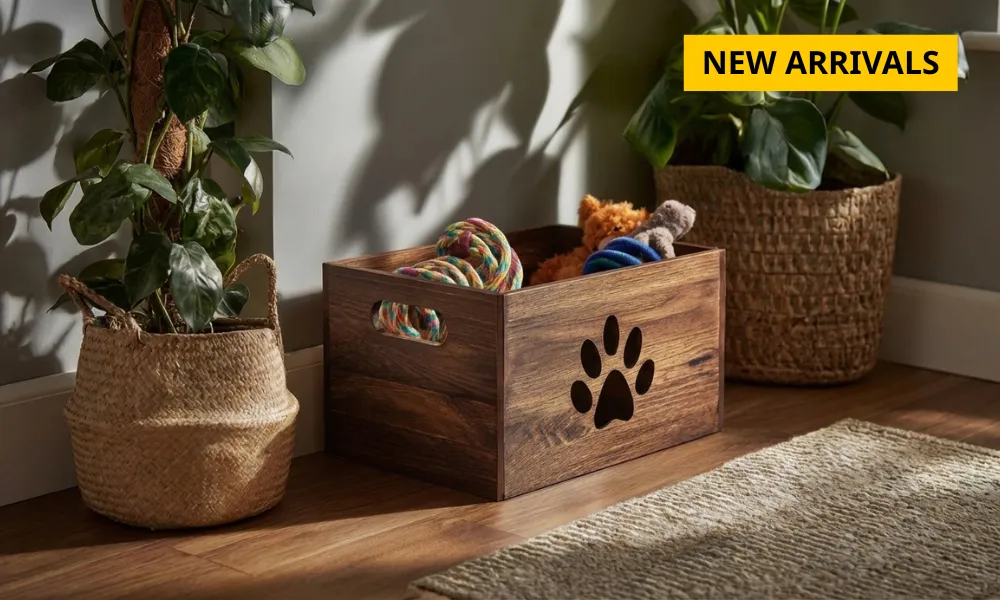
A tidy feeding zone helps reduce “grab-and-run” behavior with toys and reduces clutter that can make the area feel chaotic. Consider keeping toys stored away from bowls: Pet Toy Storage Boxes. If your dog rests right after meals, set a separate rest space a short distance away (not directly next to bowls): Pet Beds.
Vet discussion checklist
Bring your actual routine to the appointment: how many meals per day, how fast your dog eats, what bowls you use, and whether your dog is a high-risk breed type. Use this checklist to keep the conversation practical and specific.
Questions about your dog’s GDV risk
- Is my dog in a higher-risk group for GDV based on breed type, chest shape, age, or family history?
- Does my dog’s eating speed meaningfully increase risk, and should we prioritize slowing intake?
- Are there medical reasons you would recommend (or avoid) an elevated feeding setup for my dog?
Questions about changing the feeding setup
- Given my dog’s profile, would you recommend feeding on the floor, at a low lift, or at an elevated stand?
- If I use a stand, what height range should I aim for, and what posture cues should I watch for?
- Should I change meal frequency or portion size as part of a prevention plan?
Questions about prevention planning
- Should we discuss preventive gastropexy for my dog based on breed type and risk level?
- What early warning signs should I monitor, and when is it an emergency?
- How should exercise, water access, and post-meal activity be handled in my dog’s routine?