
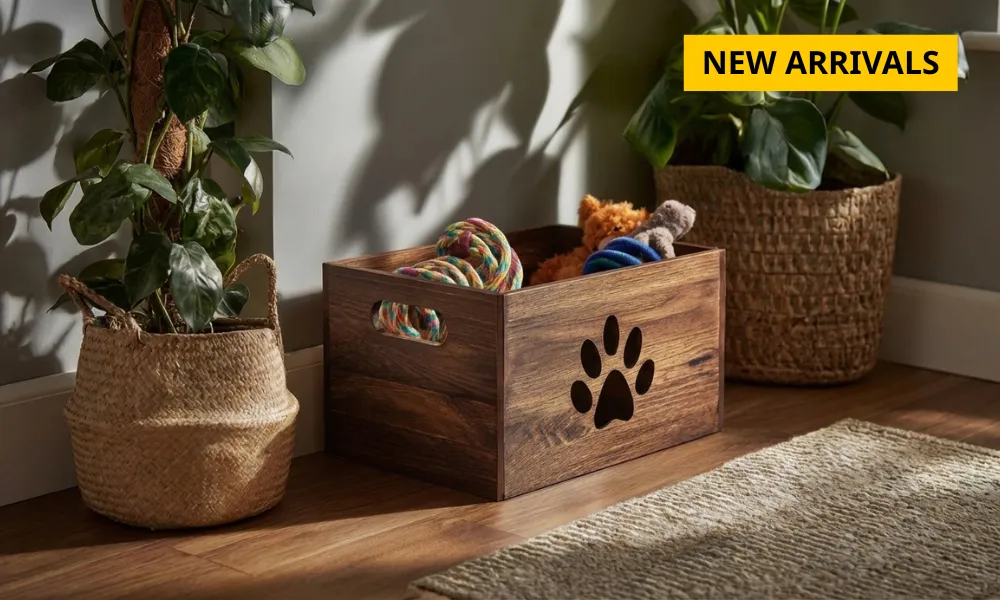
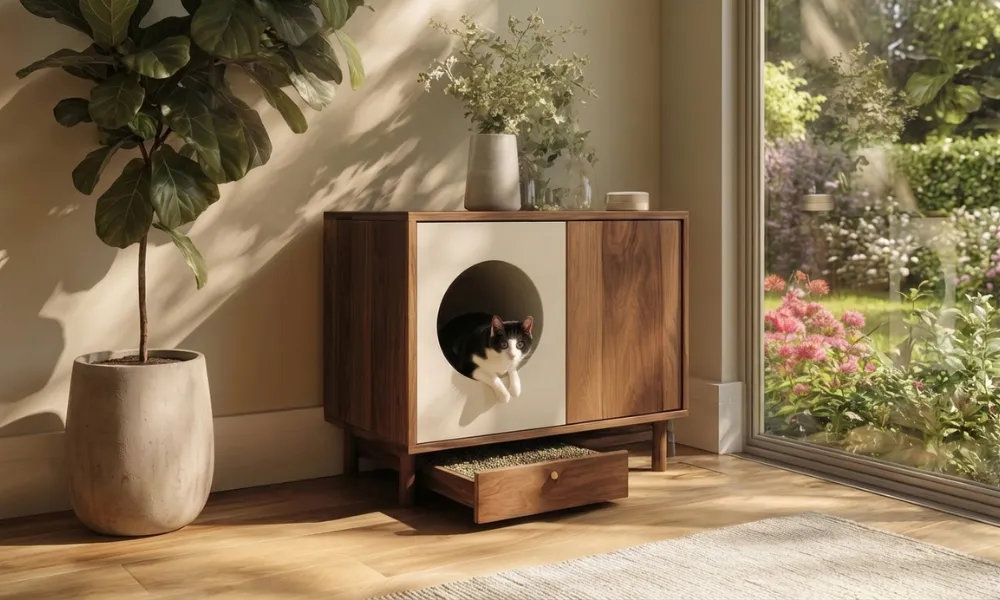
In a small apartment, clutter is rarely about having “too much stuff.” It is about having items without a defined home. Pet accessories are especially prone to spreading: toys migrate under sofas, leashes land on chairs, and treats end up on kitchen counters. The goal of these small apartment pet storage ideas is simple: keep daily items close to where they are used, keep overflow hidden, and make cleanup fast enough that you actually do it. If you want a quick starting point, begin with a single container that can hold daily toys and grooming basics: Pet Toy Storage Boxes. If you prefer storage that also looks like supplies, consider: Pet Hideaway Side Tables. Return to Home anytime to explore all collections. For more organization tips, browse the category hub: Pet Toy Storage blog. A small-space system works best when it matches your routine. Set up one main “pet zone” first, then add one secondary zone. Avoid creating storage points in every room.
Small apartment pet storage ideas: zone-based setup
Zone-based organization is the most effective small-space strategy because it reduces walking items across the home. Instead of asking “Where do we store everything?”, ask “Where do we use this item?” Then store it within reach of that spot. A few clear zones can handle most apartments: an entry zone, a play zone, and a rest zone.
Zone 1: Entry zone (leashes, wipes, small towels)
The entry is where pet items often pile up because it is the last place you touch before leaving and the first place you arrive after a walk. Keep only essentials here. A small container or shelf setup prevents the “drop zone” from taking over the space.
Zone 2: Play zone (toys, chews, training items)
The play zone should be close to where you actually play—often the living room. This is where a simple box is most useful: one place to drop toys at the end of the day. Using a dedicated box keeps toys from spreading under supplies and makes “resetting the room” easier. Start with a size that fits your daily rotation: Pet Toy Storage Boxes.
Zone 3: Rest zone (calm items only)
Many apartments have a limited number of quiet corners. Try to keep the rest zone calmer than the play zone. Storing toys right beside sleeping areas can encourage some pets to stay “on” rather than settling. If you are also building a rest setup, keep it separate from the main toy pile and use the play zone for most storage.
Quick rule for small apartments
One zone for exits and returns, one zone for play, one zone for rest. If you add more zones, the system becomes harder to maintain.
Small apartment pet storage ideas: vertical solutions
When floor space is limited, vertical space becomes your best storage option. Vertical storage helps you keep items accessible without adding more containers on the floor. The key is to keep it simple and limit how much you put on the wall so it does not start to look visually busy.
Use hooks for “daily touch” items
- Leashes and harnesses: hang them at the same height so they are easy to grab.
- Treat pouch: keep training items near the door if you use them outside.
- Light jackets: if your pet wears a coat, hanging it prevents it from landing on chairs.
Use shelves for small, controlled categories
A small shelf can hold a few categories without turning into clutter: one basket for grooming items, one container for treats, and one small bin for backup bags or wipes. Keep overflow out of sight in a closet or in a covered box. In small apartments, “open storage” works best when the categories are limited.
Keep the floor clear for movement paths
Vertical solutions help prevent tripping hazards. Small apartments often have narrow walkways. If toys and accessories end up in those paths, the home feels instantly smaller. When you keep storage mostly vertical and contained, daily cleaning becomes faster.
Multi-use pieces: hideaway tables and storage boxes
Multi-use supplies is where small apartment pet storage ideas become “invisible.” A storage piece that looks like normal supplies can reduce the visual load of pet items, especially in studios or open-plan living spaces. Two practical options are storage boxes and hideaway side tables.
Storage boxes: the simplest reset tool
A box works because it supports the daily reset: gather toys, drop them in, and close the lid (or simply place them inside). The best box is the one that is easy to access and easy to move when you vacuum. If you want a clear starting point, choose one box for daily toys and one smaller container for grooming and cleanup supplies. Browse options here: Pet Toy Storage Boxes.
Hideaway side tables: storage that blends in
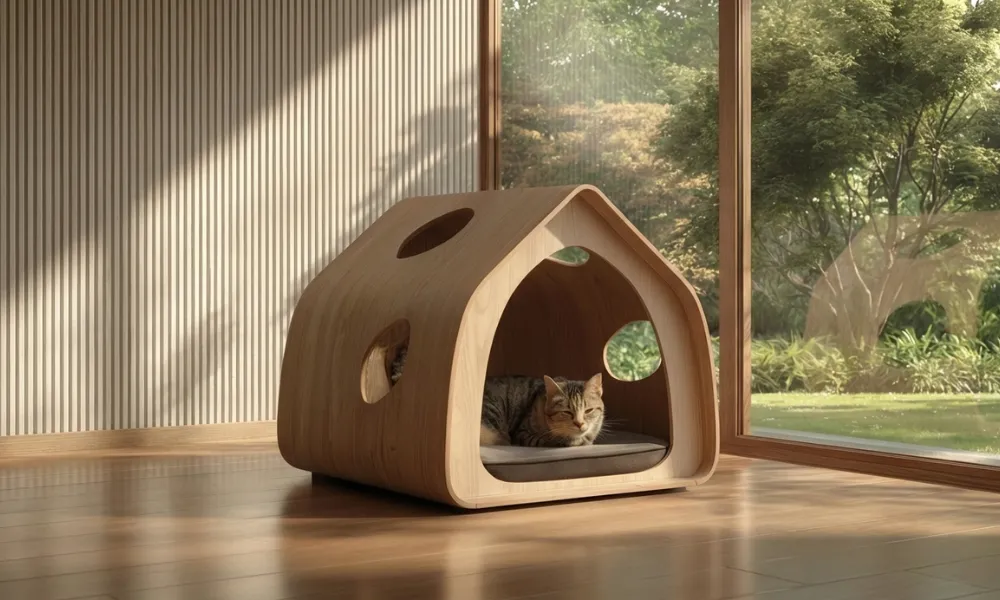
A hideaway table can work well in apartments because it uses an existing supplies footprint. It can serve as a side table while storing toys, accessories, or even a small hideaway space for pets who like enclosed napping spots. This helps reduce the need for multiple standalone bins. Explore: Pet Hideaway Side Tables.
How to choose between the two
- Choose a storage box if you want the fastest daily cleanup and flexible placement.
- Choose a hideaway side table if you want storage that visually reads as supplies and saves floor space.
- Use both if you need one “public” piece in the living room and one “backup” box in a closet for overflow.
Minimal rotation plan for small spaces
A rotation plan is the simplest way to keep pet gear manageable without buying more storage. Small apartment pet storage ideas work best when you reduce the volume of items in daily circulation. Rotation does not mean taking toys away it means limiting how many are out at once so the home stays functional.
Step 1: define “daily” vs “backup”
Pick a small set of daily-use items: a few toys, one or two chews, and the essentials for walks and cleanup. Everything else becomes backup. Backup items can live in a closet, on a high shelf, or in a closed storage box.
Step 2: keep the daily set small
- Toys: keep a small mix (for example, one chew, one soft toy, one interactive toy).
- Training: keep one treat container and one pouch, not multiple open bags.
- Grooming: keep a small kit rather than spreading items across rooms.
Step 3: rotate weekly (or when interest drops)
Once a week, swap the toy set. This keeps the home from accumulating clutter and can keep pets engaged without adding more items. The easiest way to manage rotation is with two containers: one in use and one for backup. Start with: Pet Toy Storage Boxes.
Small apartment checklist
- One primary pet zone in the living area.
- One storage container for daily toys.
- One backup container out of sight.
- Vertical hooks for entry essentials.
- Weekly toy rotation to keep volume stable.
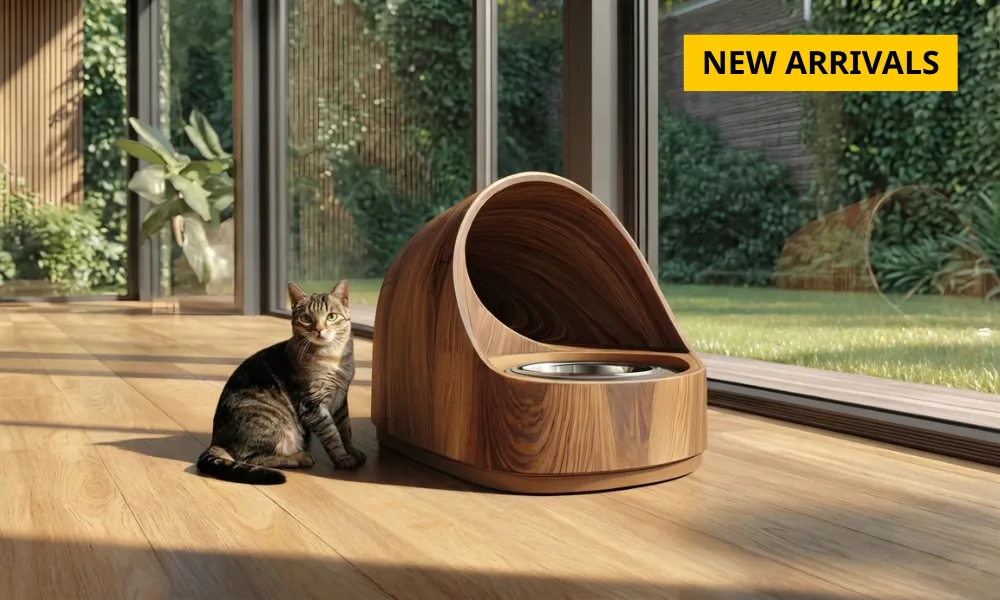
Ready to set up a cleaner system? Browse: Pet Toy Storage Boxes and Pet Hideaway Side Tables. Keep exploring organization tips in the Pet Toy Storage blog, or return to Home. Related reading: If your pet items also spread into feeding areas, build a defined feeding zone with Bowl Stands. Internal links included: Pet Toy Storage Boxes, Pet Hideaway Side Tables, Pet Toy Storage blog category, and Home, plus a supporting cross-link to Bowl Stands.