
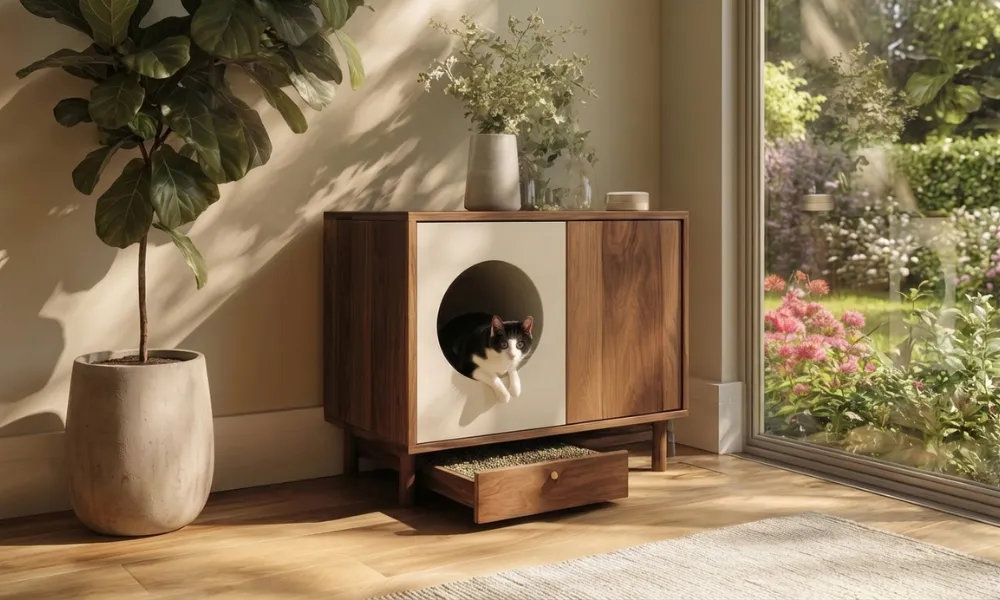
This cat litter box enclosure side table checklist focuses on ventilation, interior fit, and cleaning access-so daily maintenance stays consistent and realistic. A cat litter box enclosure side table is meant to do two jobs at once: hide the litter area in a way that blends into your room, and make cleanup easier than a fully exposed box. The best setups feel calm for your cat and practical for you. That usually comes down to three factors: airflow (to manage odors and humidity), interior fit (so the box is comfortable to use), and cleaning access (so you can keep a routine without struggling with the supplies).
Quick note: every cat has preferences. Some cats are fine with an enclosed litter area, while others avoid it if it feels warm, stale, or difficult to enter. Use the checklist below to reduce common setup problems before they become a daily frustration.
Cat litter box enclosure side table: ventilation basics
Why ventilation matters in a cat litter box enclosure side table
Ventilation is the first checkpoint for any cat litter box enclosure side table. Enclosures can trap humidity and odor if airflow is limited. When air can’t move through the interior, litter may clump faster, moisture can linger, and the space can feel unpleasant for your cat—leading to avoidance or “half in, half out” positioning.
Ventilation features to look for
Good ventilation doesn’t have to be complicated. You’re looking for pathways that allow air to enter and exit without turning the enclosure into an open box. Depending on the design, this can be achieved in a few practical ways:
- Rear gaps or vent slots: Small openings at the back can help hot air escape.
- Side cutouts: Secondary openings (even small ones) can improve cross-ventilation.
- Raised base or slight floor clearance: Helps reduce dampness and supports airflow near the bottom.
- Door spacing: Some doors or panels are designed with a minimal gap that improves circulation.
Ventilation setup tips you can control at home
Even with a well-designed cat litter box enclosure side table, your setup choices matter. Keep the interior from feeling “sealed” by avoiding thick rugs or bulky mats that block air movement around the entry. If you use liners, choose simple, wipeable options that don’t hold moisture. Also consider room airflow—placing the enclosure in a completely stagnant corner can make odors build faster, even with vents.
Practical airflow checklist
- At least one intentional airflow pathway (vent, gap, or cutout).
- Entry remains clear (no curtains, baskets, or décor blocking it).
- Interior surfaces are easy to wipe (less odor retention over time).
- Room has basic circulation (not pressed into a tight, closed corner).
Interior fit: litter box sizing and clearance
Measure your litter box before choosing a cat litter box enclosure side table
Interior fit is the second major factor for a cat litter box enclosure side table. Before you shop, measure your litter box footprint (length and width), then measure height including any rim or hood. Your enclosure should provide clearance around the box so you can lift it out, adjust liners, and clean edges without scraping.
As a baseline, plan for extra space on all sides rather than a tight “exact fit.” A snug enclosure can make scooping awkward, and it may feel cramped for your cat, especially if your cat turns around inside the enclosure before stepping into the box.
Clearance for entry, turning, and comfortable use
Cats don’t just walk straight in and stand still. Many cats pause, turn, and position themselves before using the box. If the enclosure is too tight, your cat may start using the litter box at an angle or avoid the enclosure entirely. Make sure the entry aligns with how your cat naturally approaches the box.
- Entry alignment: Your cat should enter and reach the box without squeezing between tight walls.
- Turning space: There should be room to turn around inside the enclosure without bumping the box repeatedly.
- Headroom: Adequate height helps the space feel less stuffy and supports better airflow.
If you use a mat inside, keep it minimal
Some people place a mat inside a cat litter box enclosure side table to reduce sliding. If you do, choose something thin and wipeable. Thick fabric mats can trap odor and litter dust. A simple non-slip layer that you can remove quickly is usually more practical for daily routines. If you’re also creating a separate “rest zone” away from the litter area, consider placing a calm sleep surface from Pet Beds in a different corner of the room. Keeping rest and litter spaces distinct can support cleaner habits.
Cleaning access: doors, panels, and wipe-down routine
Doors and panels: what makes cleaning realistic
A cat litter box enclosure side table only works long-term if cleaning access is simple. Look for designs with doors or panels that open wide enough to remove the litter box without twisting or lifting at awkward angles. If you have limited space, a door that swings fully open can be easier than a small opening that forces you to scoop from the side.
- Wide opening: Easier box removal and faster interior wipe-down.
- Simple hardware: Fewer crevices where dust and litter collect.
- Clear interior corners: Helps reduce odor buildup over time.
Wipe-down routine for a cat litter box enclosure side table
A consistent wipe-down routine is often more effective than occasional deep cleaning. The goal is to keep surfaces from absorbing odors and to prevent litter dust from building up in corners. For most households, a simple weekly reset works well:
Weekly wipe-down routine
- Remove the litter box and shake out any loose litter inside the enclosure.
- Wipe interior surfaces with a pet-safe, unscented cleaner.
- Clean around the entry where paws tend to track dust.
- Let the interior fully air out before placing the box back in.
If odors build quickly, the cause is often ventilation or trapped dust in seams—not just the litter itself.
Make scooping easier with nearby storage
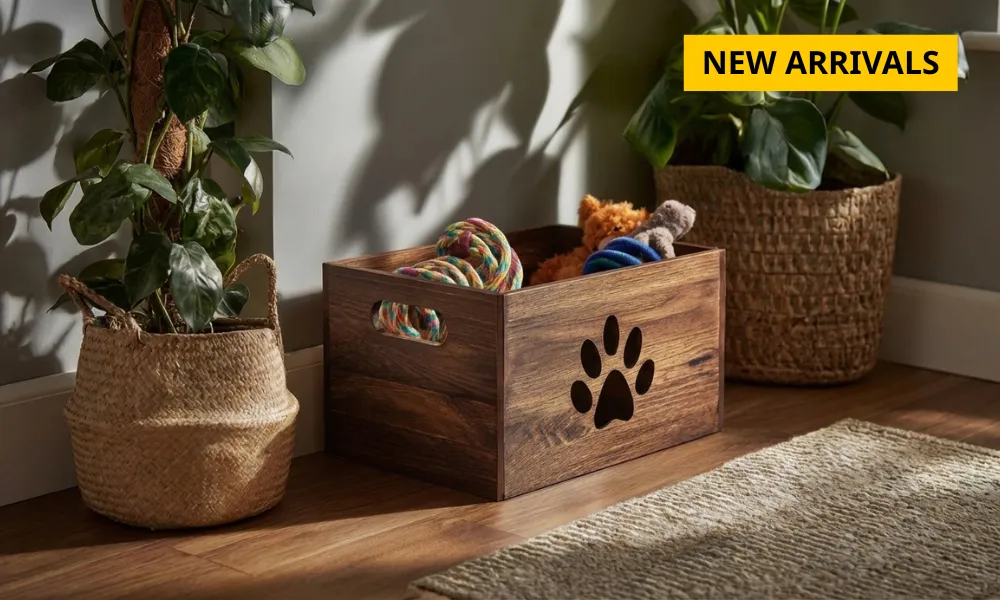
One practical improvement is to keep supplies close. If your scooper, bags, and wipes are always in the same place, you’re more likely to stick to a routine. A small organization piece from Pet Toy Storage Boxes can also work for pet accessories in a shared living room—especially if you want to avoid leaving supplies out in the open.
Placement tips to reduce tracking
Place the enclosure where tracking is easier to control
Placement affects tracking as much as the litter itself. Set your cat litter box enclosure side table where your cat exits onto a surface you can clean easily. If your cat steps onto thick rugs immediately after using the box, litter will embed into fibers and spread through the room.
- Hard flooring exit: Easier to sweep daily.
- A defined mat zone: A large litter mat outside the entry catches debris before paws reach walkways.
- Keep it away from food areas: Cats generally prefer separation between eating and litter zones.
Use traffic flow to your advantage
Avoid placing the entry directly into a narrow hallway or a high-traffic path. If people frequently step near the entry, your cat may rush or hesitate, which can lead to messier exits and more scattered litter. Choose a calm approach path that allows your cat to enter and exit at a normal pace.
Quick checklist + links to your collection
Before you commit, run through this final cat litter box enclosure side table checklist. It’s designed to prevent the common issues that make enclosures feel difficult: stale interior air, cramped fit, and inconvenient cleanup.
Cat litter box enclosure side table checklist
- Ventilation is built in (vents, gaps, or cutouts) and not blocked by décor.
- Interior fit includes clearance for box removal and turning space for your cat.
- Entry alignment matches how your cat approaches the litter box.
- Door or panel opens wide enough for easy scooping and wipe-down.
- Placement reduces tracking (mat zone + easy-to-clean exit surface).
- Supplies are nearby so daily scooping stays consistent.
Browse options here: Pet Hideaway Side Tables.
For the complete sizing and placement framework, revisit the pillar: Cat Hideaway Side Table: How to Choose Size, Placement, and Setup.
You can return to Home to explore all collections.