
A cat hideaway side table is one of the simplest ways to give your cat a private resting spot without adding a separate piece of pet supplies to the room. The goal is practical: create a cozy hideaway that also functions as a small table for everyday use. When you choose the right size and place it in the right spot, the table can reduce stress behaviors (like hiding under beds) while keeping your space tidy and organized.
Cat hideaway side table: what it is and why it’s used
Cat hideaway side table: the “two functions, one footprint” idea
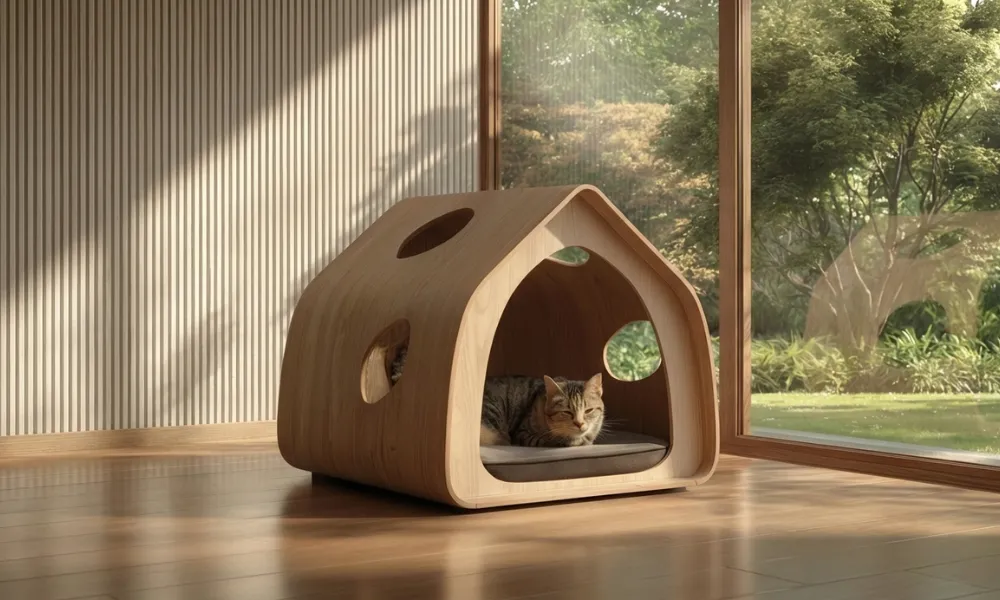
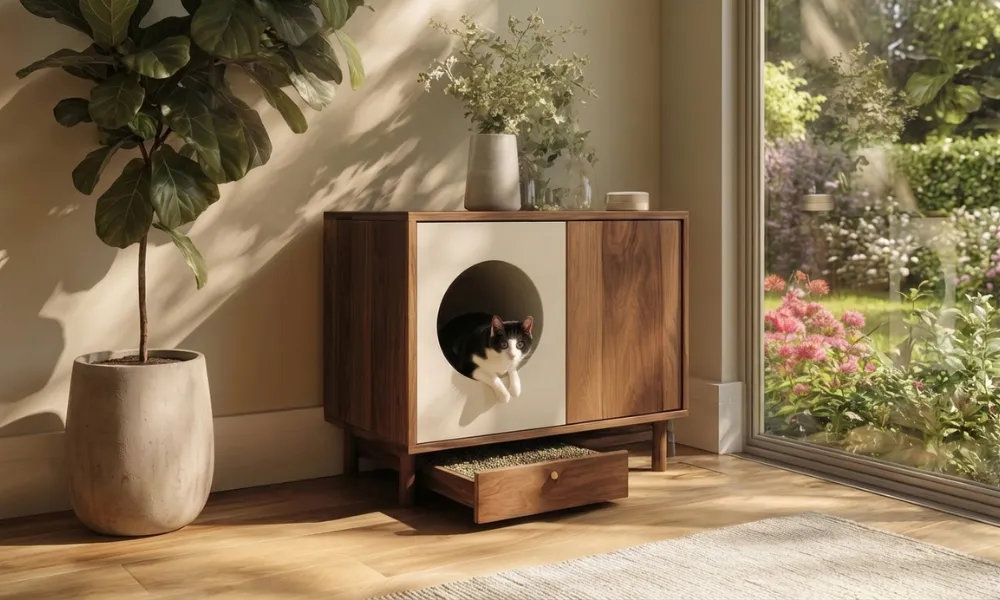
In plain terms, a cat hideaway side table combines a standard side table top with an enclosed interior space designed for a cat to rest or retreat. Instead of placing a cat condo in a corner, you integrate the hideaway into the supplies you already use—next to a sofa, near a reading chair, or beside your bed. This can be especially helpful in smaller homes where every square foot needs to work harder.
Cat hideaway side table: common reasons people choose one
- Privacy without isolation: Many cats relax more fully when they can retreat from sight while still staying close to their person.
- Cleaner layout: A hideaway reduces the number of standalone pet items in a living room or bedroom.
- Predictable routine: Cats often prefer a consistent rest location; an enclosed table can become a reliable “safe spot.”
- Better room flow: Because it replaces a normal side table, you avoid adding extra obstacles in walkways.
If your cat already sleeps in open areas, you can still use a cat hideaway side table as an option rather than a requirement. Many cats rotate between “visible naps” and “hidden naps” depending on noise, visitors, and time of day.
Cat hideaway side table sizing: interior space and entry style
Cat hideaway side table sizing: start with your cat’s resting position
Good cat hideaway side table sizing begins with how your cat actually sleeps. Some cats curl into a tight circle; others stretch long with paws extended. Measure your cat from nose to base of tail while resting (or estimate using a favorite bed) and treat that as your minimum interior length. You want enough space to turn around comfortably and settle without pressing against the walls.
If you need an easy baseline for cushions and inserts, you can reference the sleep surface options in Pet Beds, then match the interior footprint of the hideaway to a bed or mat that fits neatly.
Cat hideaway side table sizing: entry height, width, and comfort
The entry opening is not just a design detail—it controls how inviting the hideaway feels. For most adult cats, an entry that allows smooth walk-in access is easier than a low crawl-through. If your cat is older, heavier, or less agile, prioritize a comfortable entry height and a shape that doesn’t require twisting to get inside.
- Wider entry: Often works better for larger cats or cats that dislike tight openings.
- Rounded edges: Helps avoid fur snagging and makes repeat entry/exit more natural.
- Two-sided entry (when available): Can help cats feel less “trapped,” especially in busier rooms.
Cat hideaway side table sizing: ventilation and airflow basics
A cat hideaway side table should feel like a calm den, not a closed box. Airflow matters more than people expect, especially in warm climates or rooms with limited circulation. Look for designs with ventilation gaps, cutouts, or back openings that allow heat to escape and fresh air to move through the interior.
If your home runs warm, plan your setup so bedding stays breathable (more on this below). In many cases, the simplest “ventilation upgrade” is choosing a thinner mat rather than a deep, heat-trapping cushion.
Cat hideaway side table placement: quiet zones and traffic flow
Cat hideaway side table placement: pick a low-stress zone first
The best cat hideaway side table placement is usually a quiet zone where your cat already likes to relax. Cats tend to avoid enclosed spaces that sit directly in the path of foot traffic, loud doors, or active play areas. Before committing to a spot, watch where your cat naturally chooses to nap during the day and in the evening.
- Living room: Place near seating, but not in the main walkway between rooms.
- Bedroom: A calm option for cats that sleep nearby; avoid placing next to HVAC vents or rattling windows.
- Home office: Works well when your cat wants to be near you without being on your desk.
Cat hideaway side table placement: manage sound, light, and interruptions
Even a well-sized cat hideaway side table can go unused if the environment feels unpredictable. Try to avoid placing it right beside televisions, speakers, high-traffic hallways, or areas where guests frequently stand and talk. If your cat is shy, choose a placement with at least one “protected side” (against a wall or sofa) so they don’t feel exposed when entering or exiting.
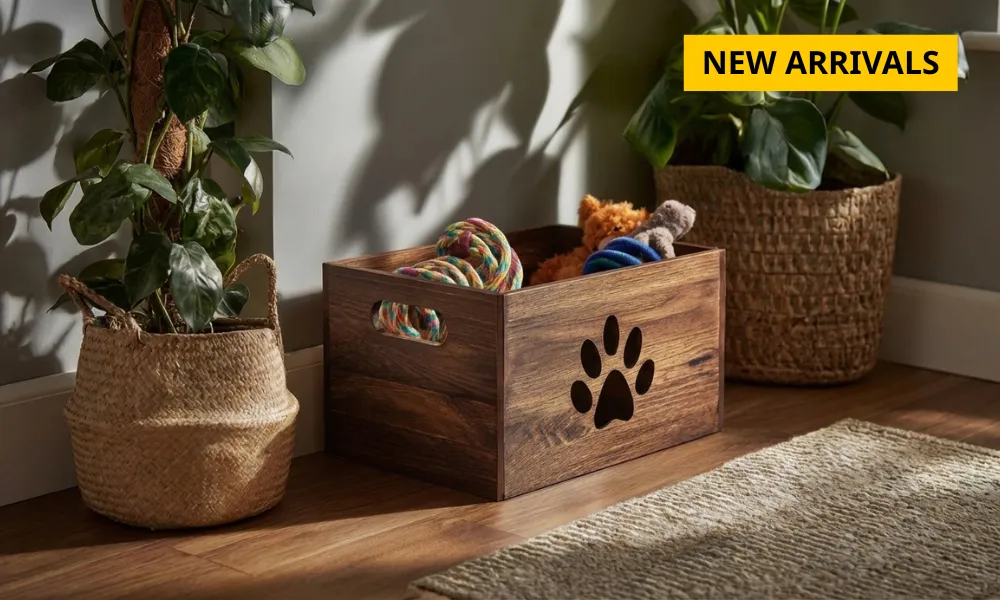
For homes with lots of pet items in one room, pairing your table with organized storage helps keep the area calmer overall. If toys tend to spread out, consider adding a dedicated option from Pet Toy Storage Boxes
so playtime and rest time feel more separate.
Cat hideaway side table placement: keep the table functional for people
Remember the second job of a cat hideaway side table: it still needs to work as a side table. Place it where you can comfortably reach a lamp, book, or drink without bumping the entry or blocking your cat’s access. If the entry is on one side, keep that side open. If the entry is on the front, leave a clear approach path.
Cat hideaway side table setup: bedding, mats, and cleaning access
Cat hideaway side table setup: choose bedding that fits the interior
A good cat hideaway side table setup starts with a simple, stable base layer. In most homes, a thin mat or low-profile pet bed works better than an oversized, overstuffed cushion. You want your cat to feel supported, but you also need enough remaining headroom for airflow and comfortable movement.
- Thin mat: Easy to remove, quick to wash, and usually better for airflow.
- Low-profile bed insert: Adds softness while keeping the interior from feeling cramped.
- Non-slip layer: A grippy mat can prevent bunching when your cat turns or kneads.
Cat hideaway side table setup: protect floors and reduce tracking
Place a washable mat just outside the entry to catch litter dust and loose fur. This small addition can keep the surrounding area cleaner and makes the hideaway feel more comfortable for cats that prefer clean paws before settling. If your table sits on hardwood or tile, a soft mat also reduces noise when your cat jumps in or out.
Cat hideaway side table setup: plan for cleaning access and routine
The easiest setups are the ones you can maintain. Make sure you can reach inside the cat hideaway side table to remove bedding, vacuum fur, and wipe surfaces without awkward angles. If your cat sheds heavily, plan for quick weekly cleanup rather than letting fur build up over time.
- Weekly: Shake out bedding, wipe the interior, and vacuum the entry area.
- Monthly: Wash bedding thoroughly and clean corners where fur collects.
- As needed: If your cat avoids the hideaway, reduce scent buildup by cleaning with pet-safe, unscented products.
Cat hideaway side table checklist + links to your collection
Use this checklist to confirm your cat hideaway side table choice and setup before you place it in your room. A few small adjustments—entry direction, airflow, and bedding thickness—often make the difference between “occasionally used” and “daily favorite.”
Cat hideaway side table checklist
- Interior space supports your cat’s resting position (curl or stretch).
- Entry style matches your cat’s comfort (height, width, rounded edges).
- Ventilation is considered (cutouts, gaps, or an airflow-friendly setup).
- Placement avoids main traffic paths and loud zones.
- Entry side remains clear (no supplies blocking access).
- Bedding fits neatly without reducing headroom too much.
- Floor mat outside the entry helps with tracking and noise.
- Cleaning access is practical for weekly maintenance.
Ready to browse options and compare layouts? Visit: Pet Hideaway Side Tables.
For complementary items in the same rooms, explore Pet Beds and Pet Toy Storage Boxes.
You can return to Home at any time to navigate by collection.
Explore other blog categories
- Pet Beds blog (pair sleep surfaces with your table setup)
- Pet Toy Storage Boxes blog (reduce clutter near rest zones)