
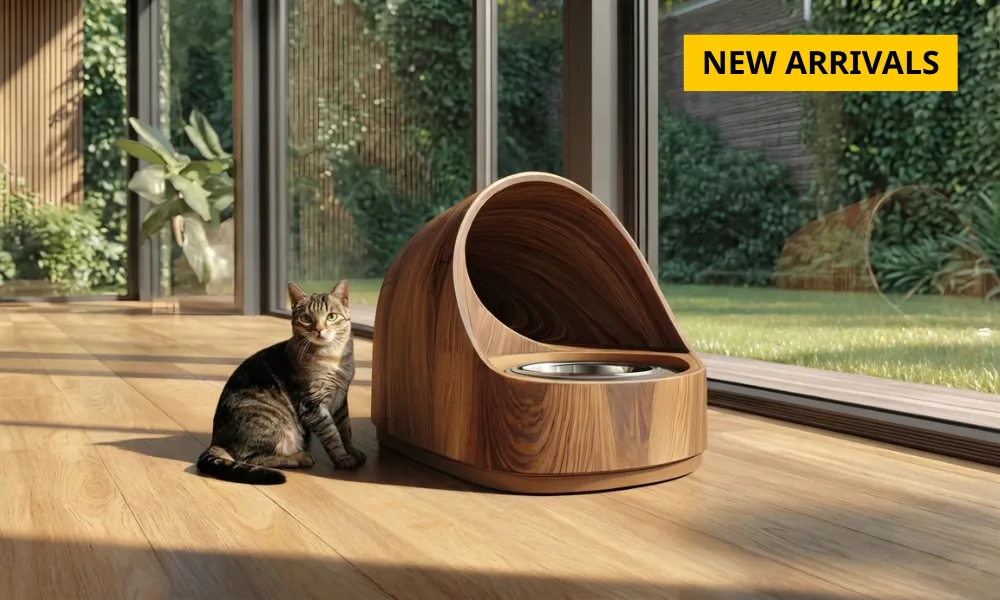
Height is the decision that determines whether an elevated stand feels natural or gets ignored. A stand that is too low can bring back the same hunched posture as a bowl on the floor. A stand that is too high can make your dog reach upward and shift weight awkwardly during meals. This elevated dog bowl stand height guide gives you a practical method to find a comfortable range and validate the fit over a week of normal feeding. If you want to browse options while you measure, start here: Bowl Stands. For the full overview of choosing a feeding station (height, style, placement, and cleaning), read the pillar: Elevated Dog Bowl Stand: How to Choose Height, Style, and Setup.
Elevated dog bowl stand height guide: why height matters
The right height helps your dog eat in a more stable, comfortable posture. You are not aiming for a rigid “perfect angle.” You are aiming for a position that looks natural: your dog can eat without bracing, spreading legs wide, or repeatedly repositioning. When the height is close to right, meals usually look calmer and the feeding station stays tidy because bowls are less likely to be pushed around.
What “good fit” looks like
- Neutral posture: the neck is not sharply bent down or stretched up.
- Steady stance: your dog can stand with paws in a normal position without shuffling.
- Consistent use: your dog returns to the station for meals without hesitation.
What “poor fit” looks like
- Too low: hunching, wide stance, or quick backing away between bites.
- Too high: reaching upward, shifting weight, or dropping food more often.
- Mess patterns: bowls slide, tip, or water splashes outward with each drink.
Elevated dog bowl stand height guide: measuring steps
The easiest method is to start with a baseline measurement and then validate it with real mealtime behavior. Use a measuring tape and a simple “temporary height test” before you commit to a fixed stand.
Step 1: measure chest level (baseline height)
- Have your dog stand naturally on the floor where they usually eat.
- Measure from floor to lower chest level, near where the front legs meet the body.
- Record the number as your baseline range reference.
Step 2: account for bowl depth and food level
A deep bowl raises the food and water level above the stand’s top surface. That means the stand height alone is not the full story. When comparing options, consider how much the bowl sits above the frame and how full you typically fill it. A slightly lower stand can still feed “higher” if the bowl is deep.
Step 3: do a 3-meal test with a temporary riser
Before purchasing, you can test height using stable household items (for example, a solid box) under the bowl to mimic an elevated dog bowl stand. Run at least three meals at the test height and watch posture. If the stance looks forced, adjust slightly and repeat. This approach is simple, practical, and usually more reliable than guessing from breed size alone.
Height guide for puppies, adults, and seniors
Life stage matters because posture and stability change over time. This elevated dog bowl stand height guide uses the same measuring method for all dogs, but the decision logic shifts: puppies change quickly, adults stay consistent, and seniors may need easier access and more stability.
Puppies: plan for change
Puppies can outgrow a “perfect height” quickly. If your puppy will grow substantially, an adjustable elevated dog bowl stand can reduce the need to replace your feeding setup. Keep the station stable and avoid overly tall heights that force reaching. Re-check measurements as your dog’s body changes.
Adult dogs: prioritize steadiness and routine
For adult dogs, consistency often matters most. Once you find a height that looks natural and comfortable, a fixed stand can be a practical choice because it reduces moving parts and simplifies cleaning. If your dog is a fast eater, prioritize a stable base that stays put on your flooring.
Senior dogs: focus on comfortable access
Seniors may benefit from a setup that reduces awkward bending and feels stable at the front paws. Also consider entry and standing effort: if your dog eats slowly or takes time to stand, the feeding zone should be calm and out of traffic flow. Many households also add a separate rest space nearby (not directly beside bowls) to support post-meal settling: Pet Beds.
Height guide: common mistakes and fixes
Most problems come from choosing a number once and never validating it with normal meals. Use these common mistakes as a quick diagnostic tool. If your setup feels messy or your dog looks uncomfortable, one of these issues is often the cause.
Mistake 1: choosing height by breed size alone
Two dogs of the same breed can have different body proportions. Use the chest-level baseline measurement instead of guessing from a generic chart. Fix: measure your dog directly and compare the result to the stand height and bowl depth.
Mistake 2: ignoring bowl depth and food level
A deep bowl can raise the effective height significantly. Fix: consider how the bowl sits in the stand and how full you usually fill it. If posture looks too “high,” try a slightly lower stand or a shallower bowl.
Mistake 3: placing the station in a high-traffic path
Dogs often eat less calmly if people are stepping around them. Fix: place the elevated dog bowl stand near a wall or corner area where your dog can face outward without being bumped. Add a mat to contain splashes and define the zone.
Mistake 4: not stabilizing the setup on slippery floors
If the stand shifts, your dog may brace or step back. Fix: use a mat and choose a stand with a stable footprint. If toys and clutter collect around the station, tidy it with Pet Toy Storage Boxes so the feeding zone stays clear. Next steps: Shop options at Bowl Stands. Return to the pillar guide: Elevated Dog Bowl Stand: How to Choose Height, Style, and Setup. Explore more in the Bowl Stands blog, or go back to Home.