
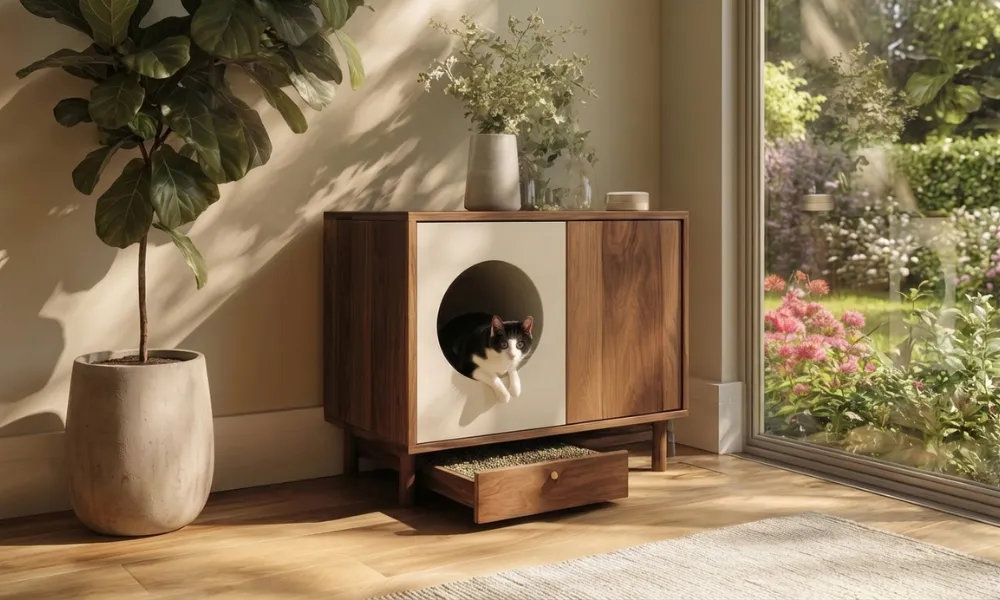
A hideaway side table can be a clean, integrated way to give your cat a private rest zone without adding bulky pet supplies to the room. But even if a cat hideaway side table looks comfortable to you, your cat may treat it like a “new object” and ignore it at first. That’s normal. The goal is not to force use it’s to transition cat to hideaway side table through small, repeatable steps that make the space feel familiar.
Tip: Many cats need time. A successful “transition” often looks like brief sniffing on day one, a quick step inside on day three, and a short nap a week later. Consistency matters more than speed.
Transition cat to hideaway side table: common reasons cats resist
New smell and unfamiliar texture
The most common reason a cat resists a new hideaway is scent. Fresh materials, packaging odors, and unfamiliar textures can make a space feel “not safe yet.” If your cat avoids the entry or sniffs and walks away, it may simply mean the hideaway doesn’t smell like home. This is why a gradual approach works best when you transition cat to hideaway side table.
Placement feels exposed or noisy
Even the right hideaway can fail if it’s placed in a high-traffic area. Cats often prefer a protected approach and a quiet surrounding. If the hideaway is near a hallway, a loud TV, or a door that opens frequently, your cat may choose a different rest spot. For placement foundations, refer to the pillar: cat hideaway side table guide.
The entry is not aligned with your cat’s preference
Some cats prefer a wider entry. Others like a more enclosed feeling. If the entry feels tight or awkward, your cat may not commit to stepping inside. When you transition cat to hideaway side table, pay attention to how your cat approaches: straight-on, from the side, or after circling the table.
Competing “favorite spots” already exist
If your cat has an established nap routine (a windowsill, sofa corner, or your bed), the hideaway needs to compete with a space that already feels perfect. That doesn’t mean the hideaway won’t work—it just means the transition requires patience and a smart setup. If your cat prefers open sleeping spots, you may also want a complementary option from Pet Beds placed nearby to create a consistent rest zone.
Step-by-step transition plan (day-by-day approach)
This day-by-day plan is designed to transition cat to hideaway side table without pressure. Adjust the pace based on your cat’s confidence. If your cat is shy, stay longer in each phase. If your cat is curious, you can move faster.
Days 1–2: introduce without expectations
- Place the hideaway side table in a quiet, familiar room zone.
- Leave the entry fully clear and do not block the path with décor.
- Keep the interior empty at first so your cat can inspect it easily.
- Allow sniffing and observation—no coaxing needed.
Goal: your cat accepts the table’s presence as “normal” in the room.
Days 3–4: add familiarity (scent + soft base)
- Add a thin mat or low-profile insert.
- Place a small blanket or cloth with your cat’s scent inside.
- Offer calm exposure: sit nearby, read, or work—avoid hovering.
Goal: the interior begins to smell and feel familiar.
Days 5–7: encourage entry with simple cues
- Use a treat trail near the entry (not deep inside at first).
- Try a favorite toy briefly, then stop and let curiosity lead.
- Reward calm investigation rather than “going all the way in.”
Goal: your cat enters voluntarily, even if only for seconds.
Week 2: reinforce a routine
- Keep the setup consistent—same bedding, same placement.
- Offer the hideaway as a nap option during quiet times of day.
- Reduce competing distractions near the entry area.
Goal: short rests become longer rests, and the hideaway becomes predictable.
If your cat starts using the hideaway, keep early “wins” low-key. Avoid moving the table frequently and avoid sudden changes to bedding. A stable environment helps transition cat to hideaway side table become a habit rather than a one-time event.
Setup details: bedding, familiar scent, and entry preference
Bedding: choose thin, stable comfort
Thick bedding can reduce interior headroom and airflow, and it can also shift when your cat turns around. A thin mat or low-profile insert is often the best first step. If you want a dedicated sleep surface elsewhere in the room (especially if your cat prefers open naps), explore Pet Beds and keep the hideaway interior simpler.
Familiar scent: use what your cat already trusts
To transition cat to hideaway side table faster, scent is your best tool. Use a blanket from a favorite nap spot or a cloth that has been in your cat’s sleeping area for a few days. Avoid strongly scented sprays. In most cases, neutral and familiar works better than “fresh.”
Entry preference: keep the approach path open
Cats often prefer an easy approach with a clear line of sight. Keep the entry side open and remove objects that could feel like “ambush points,” such as tall baskets or stacked items. If your living room tends to collect pet items, use a dedicated organizer from Pet Toy Storage Boxes to reduce clutter around the entry zone and make the area feel calmer.
Pairing with your room layout
If your cat is sensitive to sound, place the hideaway away from speakers, hallways, and doors. If your cat prefers to stay near you, place it beside your usual seating rather than across the room.
Troubleshooting: when to pause and adjust
Signs to slow down the transition
A slower pace is often the difference between success and avoidance. If your cat stops approaching the hideaway, hides more than usual, or avoids the room zone, pause the plan for a few days. The goal is to transition cat to hideaway side table in a way that feels safe, not stressful.
- Your cat sniffs the entry but won’t step inside after several days.
- Your cat enters briefly but leaves quickly when people walk by.
- Your cat only uses the hideaway at night (possible signal that daytime feels too exposed).
Common adjustments that help
Most resistance is solved with small changes. Start with placement and entry access, then simplify the interior:
- Move it to a quieter corner: Reduce foot traffic and sudden noise.
- Change the scent source: Use a different familiar blanket or cloth.
- Reduce interior clutter: Start with one thin mat rather than multiple layers.
- Keep the routine steady: Same time of day, same calm approach.
When the hideaway might not be the right fit
Some cats strongly prefer open sleeping areas. If your cat consistently rejects enclosed spaces, you may get better results by using an open bed nearby and treating the hideaway as an occasional retreat rather than the main sleep spot. In that case, you can still keep the room organized by pairing Pet Toy Storage Boxes with a comfortable option from Pet Beds.
Quick checklist to transition cat to hideaway side table
- Place the hideaway in a quiet, familiar zone first.
- Add familiar scent before expecting your cat to enter.
- Use thin bedding to keep space open and breathable.
- Keep entry access clear and predictable.
- Reward calm curiosity, not forced entry.
- Pause and adjust if avoidance increases.
Ready to explore options? Browse: Pet Hideaway Side Tables. For the full sizing and placement framework, read the pillar: Cat Hideaway Side Table: How to Choose Size, Placement, and Setup.
Return to Home to navigate all collections.
More reading in this blog category (Hideaway Side Tables)