
Pet bed size guide: why sizing affects usage
Sizing is the most common reason pet beds go unused. A bed can look comfortable and still feel “wrong” to a dog or cat. Pets choose sleep spots that let them relax without constantly adjusting their body. When the bed is undersized, they may bump into the edges, hang paws off the side, or feel unstable when rolling over. When the bed is oversized, some pets lose the “contained” feeling they prefer especially curlers and pets that seek corners. This pet bed size guide focuses on measurements taken from your pet’s actual sleeping posture, then turns those numbers into a practical bed choice. It also helps you avoid a common trap: using only weight-based size charts. Weight matters, but posture and body length typically predict comfort more accurately.
Pet bed size guide step 1: measure sleeping length
Start with one measurement you can repeat anytime: sleeping length. You are not measuring “standing height.” You are measuring how much space your pet uses when fully relaxed.
How to measure sleeping length for dogs
- Wait for a natural nap when your dog is fully relaxed, ideally lying on their side.
- Measure nose to tail base (where the tail starts, not the tail tip). This matches the body length that needs support.
- Add comfort space of 6–10 inches for sprawlers; add 4–6 inches for curlers who stay compact.
How to measure sleeping length for cats
- Measure during a stretched nap (side stretch is usually easiest to measure).
- Measure nose to tail tip if your cat regularly stretches long; use nose to tail base if they usually curl tight.
- Add comfort space of 4–8 inches depending on how often your cat sprawls.
Tip for accurate measuring
Use a soft measuring tape or a string you can lay alongside the body, then measure the string. This is often easier than holding a tape in place while your pet shifts.
Pet bed size guide step 2: match sleep position
After length, match the bed to how your pet prefers to rest. This step is what turns your measurement into a shape and sizing choice. In this pet bed size guide, think in terms of “curl,” “sprawl,” and “lean.”
Curlers: choose a snug interior with supportive edges
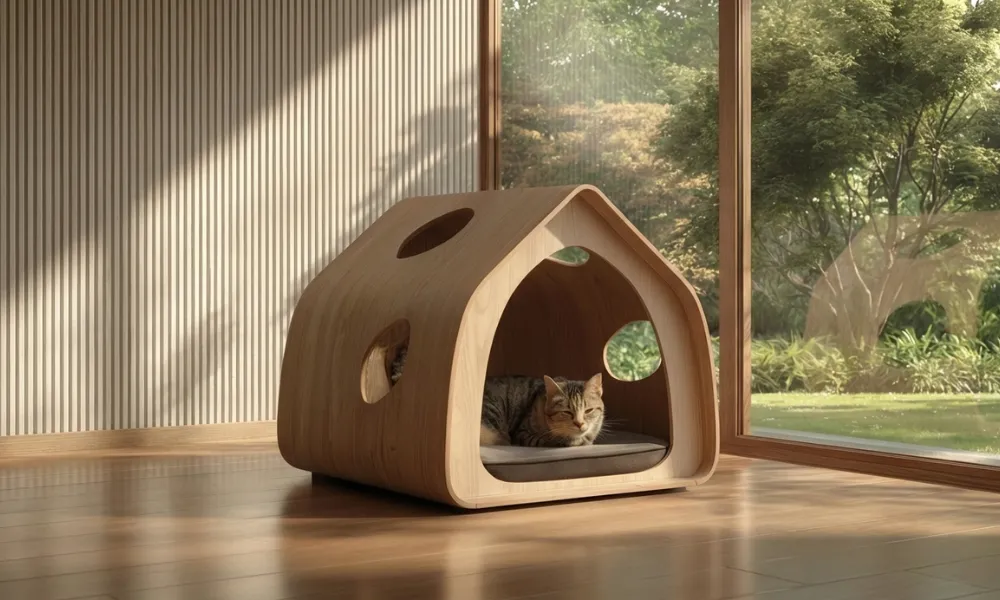
Curlers tuck paws and tail and often like a boundary around the body. If your pet curls tightly, prioritize an interior sleep surface that fits their curled diameter plus a small buffer. Beds that are too large can feel open and may be ignored in favor of a smaller, contained spot.
Sprawlers: choose a longer sleep surface for full extension
Sprawlers stretch out and shift positions. For these pets, length is the main comfort factor. If your pet often sleeps on their side with legs extended, size up so they do not hit the edge when rolling. A bed that is long enough usually gets used more consistently.
Leaning sleepers: consider a bolster edge and placement
Some pets press against supplies, walls, or your legs. That behavior often signals a need for a stable edge. A bolster-style bed can provide that support, but placement matters too. If possible, set the bed near a low-traffic wall so the pet can lean without being disturbed.
Pet bed size guide step 3: check interior sleep surface
Here is the part many shoppers miss: the listed bed dimensions are usually the outer dimensions, not the interior sleep surface. In this pet bed size guide, your measurement should match the interior, usable space—because that is where your pet’s body actually rests.
Why interior dimensions matter (especially for bolsters and donuts)
Bolster and donut beds can look large because the rim adds width, but the interior sleep surface can be much smaller. If your pet is a sprawler, you may need to size up so the interior length matches your sleeping-length measurement. If your pet is a curler, the smaller interior may be exactly what they want.
Quick interior sleep surface check
- Look for “sleeping area” or “interior dimensions” on the product page if available.
- Compare your sleeping-length number to the interior length, not the outside length.
- Account for sloped sides (some beds narrow toward the bottom), which can reduce usable space for larger pets.
Once you confirm interior fit, you can shop with more confidence:
Pet Beds. If you want the full framework beyond sizing support, shapes, care, and placement return to the pillar: Pet Beds: How to Choose the Right Pet Bed for Dogs & Cats.
Pet bed size guide: common sizing mistakes
This pet bed size guide closes with the issues that cause the most returns and “unused bed” situations. Avoid these and your odds of success go up fast.
Mistake 1: Choosing by weight only
Weight charts can be a starting point, but they do not capture posture. Two pets with the same weight can have very different body lengths and sleep habits. Use weight as a secondary check after measuring sleeping length and interior sleep surface.
Mistake 2: Ignoring the interior sleep surface
Outer dimensions can mislead you, especially for bolster and donut beds. If the product listing does not show interior dimensions, choose a size that gives you room to spare based on the bed’s shape and rim thickness.
Mistake 3: Forgetting entry height for seniors and small pets
A tall edge can be a barrier for older pets or short-legged breeds. Even if the interior size is right, difficulty stepping in can reduce usage. Consider lower-profile designs or a bed placed near a stable surface for easier access.
Mistake 4: Oversizing a pet that prefers containment
Some pets avoid beds that feel too open. If your pet seeks boxes, corners, or baskets, do not automatically size up. Choose an interior that matches their curled posture with a small comfort buffer. Continue reading in the category: Pet Beds blog. Or go back to the main guide: Pet Beds: How to Choose the Right Pet Bed for Dogs & Cats. Browse products here: Pet Beds. Return to Home