

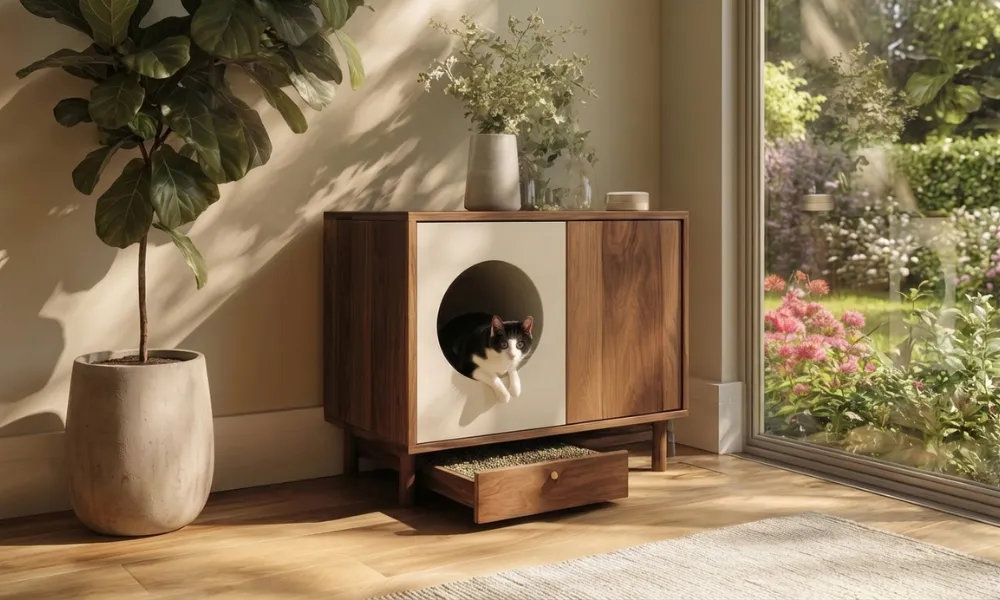
A hidden litter box cabinet can make a home feel calmer by keeping the litter area visually contained. But odor control depends less on “hiding” and more on consistent airflow and cleaning habits. When odors get trapped, people often assume the cabinet is the problem—when the real issue is usually a combination of insufficient ventilation, damp litter, or a routine that’s hard to maintain long-term. Odor control principle: the best hidden litter box cabinet is the one you can clean quickly and regularly. If the cabinet makes scooping harder, odors will build no matter how good the design looks.
Hidden litter box cabinet: what affects odor most
Moisture and buildup are the main triggers
In most homes, odor from a hidden litter box cabinet is driven by moisture and buildup rather than the cabinet itself. Damp litter holds odor longer, and residue on interior surfaces can accumulate over time. In an enclosed cabinet, that buildup can become more noticeable because air is contained and recirculates.
Airflow problems can amplify normal litter odors
When a hidden litter box cabinet has limited ventilation, the air inside becomes stagnant. Odors that would normally dissipate in an open area linger and concentrate. This is why ventilation habits matter as much as litter choice. Even small airflow improvements—like keeping vents clear and avoiding overstuffed mats—can make daily odor control more manageable.
Cleaning access determines consistency
The biggest “hidden factor” is cleaning access. If the door opening is narrow or the interior is difficult to reach, you’re less likely to wipe down corners where dust and odor settle. In other words: the best hidden litter box cabinet is the one that supports your routine, not the one that looks the most concealed.
If you want a checklist specifically for enclosure layout and cleaning access, read: Cat litter box enclosure side table: ventilation and cleaning checklist.
Ventilation and airflow habits
Ventilation features to look for in a hidden litter box cabinet
A hidden litter box cabinet needs a way for air to enter and exit. This can be a rear gap, side cutouts, vent slots, or a design that avoids sealing the interior completely. The goal is not to expose the litter box—it’s to prevent warm, damp air from getting trapped.
- Rear vents or gaps: Often help warm air escape without changing the exterior look.
- Side cutouts: Useful for cross-ventilation, especially in warmer rooms.
- Unblocked entry: Even the entry contributes to airflow when it’s kept clear.
Airflow habits you can build into your routine
Ventilation isn’t only a design feature—it’s also a habit. A practical approach is to “reset” the interior air during cleaning. When you scoop, briefly open the cabinet, let it air out, and wipe any surfaces that hold odor. This simple routine helps a hidden litter box cabinet stay fresh without requiring deep cleaning every day.
Daily airflow reset (2–3 minutes)
- Open the cabinet door/panel while scooping.
- Shake out the litter mat outside the entry if needed.
- Check vents and remove dust buildup near gaps/cutouts.
Placement affects ventilation more than people expect
Even with vents, a hidden litter box cabinet placed in a tight, stagnant corner can hold odor longer. If possible, avoid pressing the cabinet flush against heavy curtains or bulky supplies that blocks air movement. Choose a placement that keeps vents clear and the entry path open. For placement ideas that work in compact layouts, see: Cat hideaway side table for small spaces: where to place it.
Cleaning schedule that stays realistic
Start with a routine you can actually keep
The most effective hidden litter box cabinet cleaning schedule is the one you will follow consistently. A perfect routine that’s hard to maintain becomes an occasional deep clean—which usually leads to odor spikes. Instead, aim for short daily actions plus one weekly reset.
Daily: scoop and quick surface check
Daily scooping is the main driver of odor control in a hidden litter box cabinet. Each day, scoop waste, check for damp clumps stuck to edges, and do a quick wipe if residue is visible near the entry or on the interior floor. This takes minutes and prevents odor buildup from becoming a bigger weekly task.
- Scoop waste and stir lightly to break up clumps.
- Check corners and edges where clumps stick.
- Wipe the entry area if dust is collecting.
Weekly: wipe-down routine that prevents odor absorption
Once a week, remove the litter box, shake out any loose litter, and wipe the cabinet interior. Use pet-safe, unscented cleaning products and let surfaces dry fully before putting the box back. A weekly reset keeps a hidden litter box cabinet from holding “background odor” even when the litter box itself is clean.
Weekly wipe-down checklist
- Remove litter box and empty loose litter from the interior.
- Wipe walls, floor, and corners (focus on seams and edges).
- Clean around vents/cutouts to reduce trapped dust.
- Let interior air out before reinstalling the box.
If weekly feels hard to maintain, reduce steps. Consistency matters more than intensity.
Monthly: refresh the full setup
Every few weeks, evaluate the full setup: replace worn mats, check if vents are blocked by dust, and confirm the interior still fits the litter box comfortably. If your cabinet has doors or panels, check that hardware still opens smoothly—cleaning becomes harder when doors stick, and routine slips quickly.
If your cat is still adjusting to an enclosed setup, a gradual introduction may help: How to transition your cat to a hideaway side table (step-by-step).
Litter mat and tracking reduction setup
Why tracking makes odor feel worse
Tracking doesn’t just spread litter—it also spreads dust and small particles that hold odor. When litter dust spreads across rugs and corners, your home can feel less clean even if the hidden litter box cabinet is managed well. A tracking reduction setup keeps cleaning simpler and helps odor control feel more consistent.
Set up a “mat zone” outside the entry
The simplest improvement is a dedicated litter mat outside the cabinet entry. This creates a controlled exit path where paws can shed litter before your cat moves into main walkways. In small homes, even a modest mat zone can significantly reduce scattered litter. If the entry area tends to collect other pet items, keep it organized so the path stays clear and easy to clean.
Placement tips to reduce tracking further
Where you place the cabinet changes how far litter travels. Whenever possible, have the entry open onto a surface you can sweep quickly (hard flooring rather than a deep rug). Also avoid placing the entry directly into a hallway line where your cat has to “launch” out quickly due to foot traffic. A calmer exit reduces scatter. For more tracking-focused placement tips, see: cat litter box enclosure side table checklist.
Keep the surrounding corner clean with simple storage
A tidy corner supports a tidy routine. If scoops, bags, wipes, or pet accessories pile up around the cabinet, cleaning feels harder. Consider storing these items in a dedicated container so they’re always within reach without cluttering the entry zone. If you also want a coordinated supplies look, start with Pet Hideaway Side Tables and keep your home navigation simple through Home.