
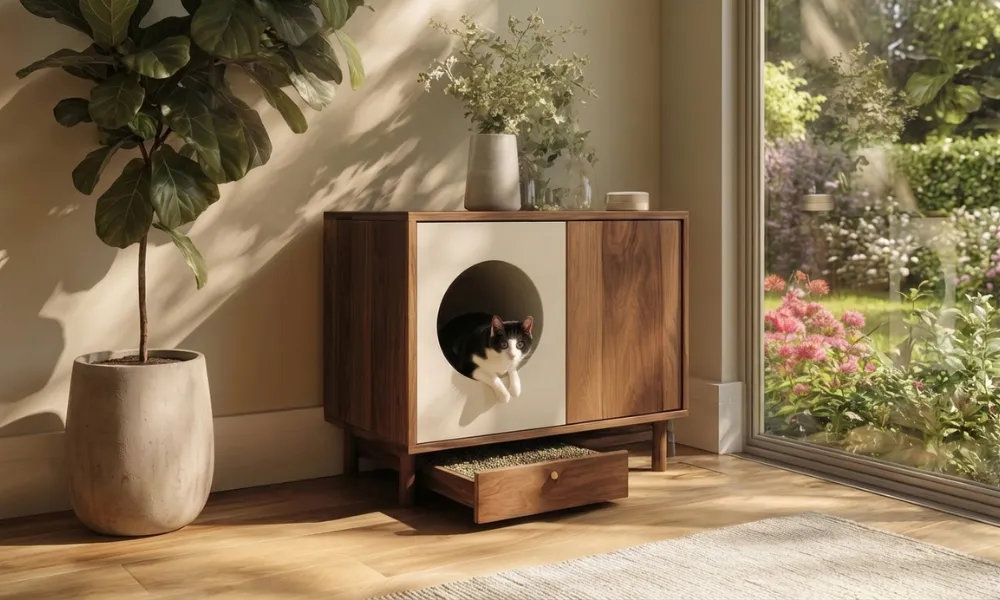
In a small home, every object has to earn its spot. A cat hideaway side table for small spaces can work well because it replaces a regular side table while giving your cat a calm retreat. The challenge is placement: small rooms have tighter traffic lines, fewer “quiet corners,” and more shared zones. If you put the hideaway in the wrong place, your cat may avoid it—or it may simply become a daily annoyance for you because it blocks movement.
Small-space goal: keep the entry path clear for your cat and keep the walkway clear for you. Most placement mistakes happen when the entry faces a traffic line or when the table sits in a pinch point between supplies.
Cat hideaway side table for small spaces: placement rules
Rule 1: protect one side and keep one side open
The easiest way to make a cat hideaway side table for small spaces feel safe is to “anchor” it. Place at least one side against a wall or the side of a sofa so your cat doesn’t feel exposed from every direction.
Then keep the entry side open so your cat can approach without squeezing around objects.
Rule 2: avoid pinch points in the room layout
A pinch point is any narrow pass-through where people naturally brush past supplies—between a coffee table and sofa, between the bed and dresser, or beside a doorway. A cat hideaway side table for small spaces should not sit in these spots because it increases accidental bumps and makes your cat less likely to use the hideaway during busy hours.
Rule 3: maintain a predictable approach path
Cats prefer predictable movement. If the entry faces a walkway where feet pass constantly, your cat may hesitate to enter. Ideally, the approach path is a short, clear route from your cat’s typical hangout area. In apartments, this often means a corner near your seating area rather than near the main door.
Rule 4: use the “two-step test” for daily comfort
In small rooms, a simple test helps: can you walk past the side table with two normal steps without turning your body sideways? If not, the placement is likely too tight. A cat hideaway side table for small spaces works best when it replaces an existing table footprint, not when it adds a new obstacle.
Quick placement checklist (small spaces)
- Entry side stays clear (no baskets, décor, or cords blocking it).
- At least one side is protected (wall or sofa side).
- Not placed in a pinch point (between supplies or near door swing).
- Easy cleaning access (you can reach the interior without moving other supplies).
- Cat approach is predictable (not facing a constant traffic line).
Best spots by room: living room, bedroom, entryway
Living room: beside the sofa, but off the main walkway
For most homes, the living room is the best place for a cat hideaway side table for small spaces because cats often want to rest near people. A reliable placement is next to the sofa arm, with the entry facing inward toward the sofa side or slightly angled away from the walkway. This creates a “social” rest area that still feels sheltered.
- Good option: Next to a sofa, with a wall or sofa backing one side.
- Avoid: Between the sofa and coffee table if it tightens the walking line.
- Small-space win: Replace an existing end table with the hideaway instead of adding an extra piece.
Bedroom: a quiet corner near your bed (not at the foot traffic line)
Bedrooms can work well because they’re typically calmer than living rooms. The best spot for a cat hideaway side table for small spaces is often near the head of the bed where activity is lower. Avoid the foot-of-bed traffic zone where you change clothes, open drawers, or step in and out quickly.
- Good option: Near a nightstand zone if it doesn’t block drawers or doors.
- Avoid: Right beside a closet door or along the main path to the bathroom.
- Practical tip: Keep the interior setup simple so you can remove bedding easily for cleaning.
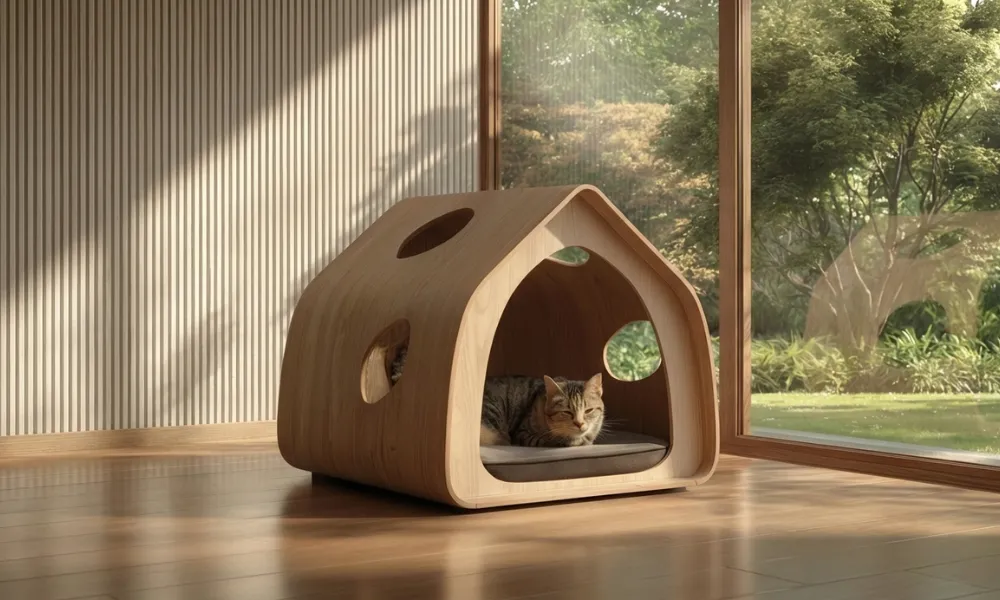
If your cat prefers open sleeping spots in the bedroom, you can pair the hideaway with a separate rest surface from Pet Beds. This can reduce pressure on the hideaway and still keep your layout clean.
Entryway: only if it stays calm and clear
Entryways are usually high-traffic, but some small homes have entry corners that are surprisingly quiet (especially if the door area is not used frequently). If you’re considering an entryway placement for a cat hideaway side table for small spaces, prioritize safety and comfort: keep the entry facing away from the door and avoid placing it where the door swing or shoes will block access.
- Good option: A protected corner with a clear approach path.
- Avoid: Directly beside the front door or in a zone where bags and coats are dropped.
- Small-space warning: If guests consistently stand in that area, your cat may avoid the hideaway.
Avoiding noise and high-traffic zones
Noise sources that can reduce use
A cat hideaway side table for small spaces can become a “no-go” zone if it’s placed beside common noise triggers. These triggers vary by home, but typical examples include TVs, speakers, rattling windows, hallways, or even the vibration of laundry machines in nearby closets.
- TV and speaker zone (especially if the entry faces the sound source)
- Hallway pass-through (constant footsteps)
- Doorways and door swing areas
- Areas where supplies is moved often (folding chairs, rolling carts)
High-traffic doesn’t just mean “busy”—it also means “unpredictable”
Cats often tolerate routine traffic (the same person walking by at the same times) better than unpredictable traffic (guests, kids running, people stopping and turning). If your home is small and shared, the best strategy is to place the hideaway where movement is straight-line and minimal, not where people stop and gather.
Use a gradual transition if your cat is cautious
If your cat is sensitive, placement alone may not be enough. Pair good placement with a gradual introduction plan: How to Transition Your Cat to a Hideaway Side Table (Step-by-Step). This helps your cat accept the hideaway even in a compact layout.
Pairing with storage for a cleaner corner
Why storage matters more in small spaces
In small homes, visual clutter piles up quickly. Toys, grooming tools, and random pet accessories often end up near the same corner where you want your cat to rest. If the hideaway entry is surrounded by clutter, it can feel harder for your cat to approach and harder for you to clean. A clean corner supports consistent use of a cat hideaway side table for small spaces.
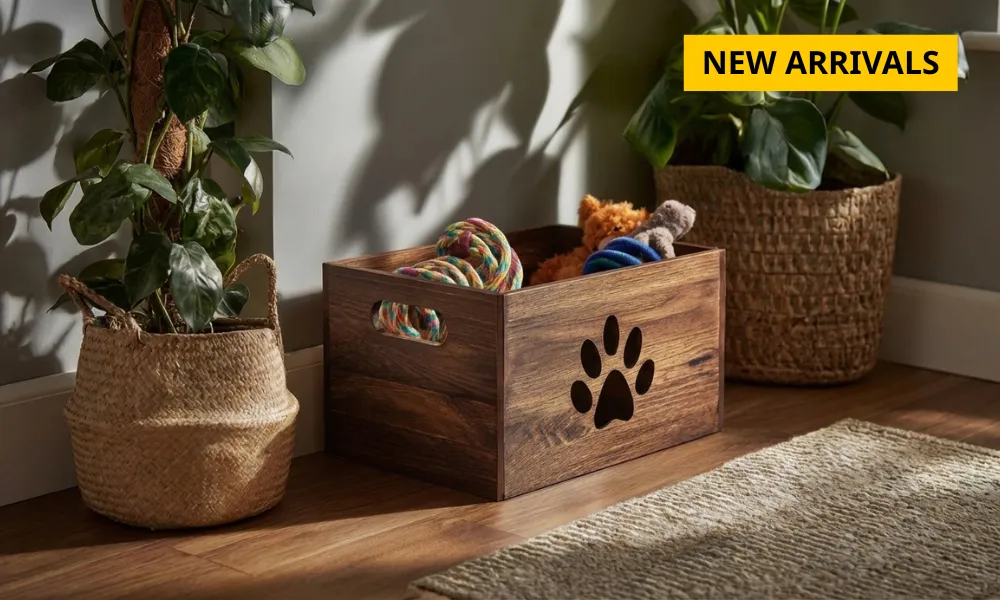
Pair with Pet Toy Storage Boxes to protect the entry zone
One practical strategy is to place a compact organizer next to (not in front of) the hideaway. This keeps toys contained without blocking access. Browse coordinated options here: Pet Toy Storage Boxes. The goal is a corner that looks intentional and remains easy to maintain.
Keep a “cleaning lane” for quick maintenance
The best small-space setups include a cleaning lane: enough space to open doors or reach inside the hideaway, remove bedding, and wipe surfaces. If you need to drag supplies every time you clean, the hideaway will become less realistic long-term.
Small-space placement summary
- Anchor the hideaway with one protected side; keep the entry side open.
- Use the two-step test to avoid blocking movement.
- Choose a low-noise zone that stays predictable throughout the day.
- Pair with storage to keep the corner clear and easy to maintain.
Shop options: Pet Hideaway Side Tables . Keep toys contained: Pet Toy Storage Boxes ·
Return to Home